September in the Garden
September is a time of transitions. The relief of cooler weather and more reliable rain, recovery from the stress of summer and preparation for the coming winter. The garden and the gardeners can find rainy days to rest and recover in September, time to plan for how to make the most of this time of transition.
September is one of those months that has a variety of different types of work happening all at the same time–harvesting, weeding, planting, transplanting, preserving and winterizing. Hopefully you all have made some plans during the summer months of heat for what fall planting you will be doing! It can be a lot of work, but the rest of winter is coming, and I know for myself the cool days and return of rain always gives me a boost of energy and motivation to be working in the garden.
Design
Take pictures of your garden now at its peak, it helps to have a visual record to look back at when you are making plans in winter. In your garden journal, keep making notes about what is working, what is not, what challenges you’ve been facing and solutions you’ve tried, and new ideas to think about over the winter. Keep adding plants to your plant wishlist for next year, and if you have the time with all that’s going on, do try to visit other local gardens to get inspiration for fall transplanting and next year’s planting!
Fall is in my opinion the best time to transplant perennials, plant bare roots, and to divide perennials. The rain and cool weather helps water everything in for you, the snowmelt of winter and then spring rains again water things in for you–overall its just less watering labor! Nature waters everything for you instead.
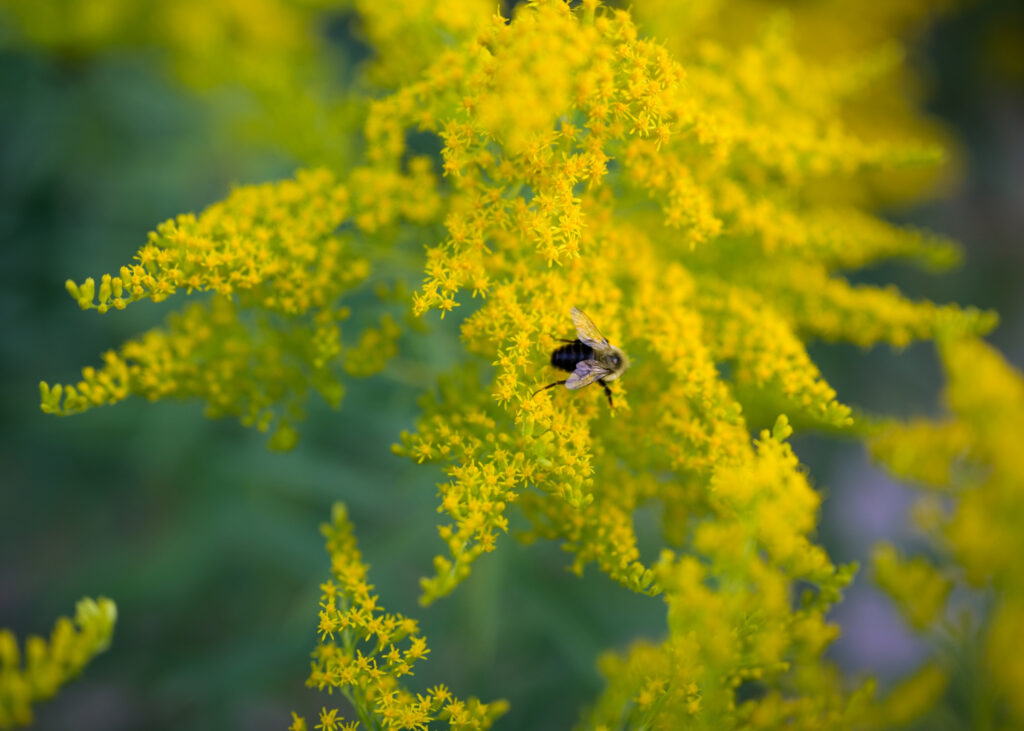
Evaluate your fall perennial garden–where is there fall color/plants, where are there gaps in those plantings? Where could you use more goldenrod, asters, mums, or fall-blooming bulbs or anemones? What plants could you pinch back or cut back for a fall rebloom? Keep in mind that not every bed needs to be a 4-season bed. Sometimes its nice to have beds that have their season to shine and really do that well.
Fall Planting
Perennials
This is my big season to divide existing perennial forbs (flowering herbaceous plants), move self-seeded biennials, and transplant perennial starts. But fall is a great time to plant almost all perennials, period. Whether that be flowering herbaceous plants, vines, ground covers, shrubs or trees.
The warm soil and cool air and regular rain are just perfect for them to settle in and get established. Transplant earlier in the month to give plants more time to get established before the cold comes. Northern gardeners should try to finish fall transplanting/division early in the month, those in southern areas have until the end of the month.
If you are going to put in mums, make sure they are really hardy perennial mums and will survive our winter! Consider planting spring-flowering bulbs and fall flowering perennials at the same time to create a lasagna planting, layering asters, pansies, violas or mums on top of spring-flowering bulbs (not to be confused with lasagna beds).
Mulch and water after plantings and monitor rainfall and soil moisture. Proper watering will help speed root establishment and improve the odds of winter survival.
Bulbs
And of course fall is the time to plant spring-flowering bulbs! Make sure of course to selects bulbs that will suite their growing location–light, soil, moisture, pH. Look back at your notes in your garden journal from spring at where you noticed the gaps in your garden, or where cool season spring grasses where taking over–these are where you’ll want those spring-flowering bulbs.
If you really want to have a spring bloom heavy area or container, you can try lasagna planting of just spring-flowering bulbs. You can also plant spring-flowering ground covers around these to help keep them weed/grass free and and mask declining foliage as well, such as violets. Planting bulbs can wait until late September or early October, depending on how north you live in Michigan, you have plenty of time, really until the ground freezes!
Visit your favorite local garden center to purchase spring-flowering bulbs, be sure to purchase full-sized bulbs that are firm and free from soft, dry, or discolored spots and pests. Store your bulbs in a cool, dark place until you are ready to plant them, like in the basement, the refrigerator, or a similar location. Avoid storing bulbs in a fridge that has ripening fruit though, it can interfere with flower development.
Plant autumn crocus in with your groundcovers. These bulbs sprout leaves in the spring that fade with spring, and then flower in the fall.
Bearded irises can still be dug up and divided, with these the earlier the better at this time of year to avoid winter injury. Make sure to cut back the iris leaves and remove rotted, damaged and old non-flowering sections of the the rhizome when transplanting, and to not plant them too deep.
Edibles
You can still plant annual edibles! Where you don’t have season extenders, add short-season and frost tolerant plants like spinach, greens, and lettuce. Some of these you could grow in containers so that you can take them inside if a frost is coming, or have some frost protection handy for covering on cold nights.
Store leftover seed in airtight containers in the refrigerator or a cool controlled environment. Prune out stem tips and flowers on tomato, squash and melon plants early this month to encourage it to focus its energy on ripening existing fruits instead of producing more. It will get too cold for them to have time to reach maturity sadly.
You can generally get a fall harvest of rhubarb before the first hard frost (see below on what is considered a hard frost). You can also divide and transplant your rhubarb after the light frost in fall, so it’s a small window there, but you can also divide them in early spring as well.
Keep cutting, using and preserving fresh annual herbs. Stop harvesting perennial herbs in early September, about one month before your first expected frost date. Harvesting after that stimulates tender new growth that winter will kill when it should be hardening off for the winter. Regular clippings should stop after that. However, a modest (1/3 of the plant) harvest slightly later in the fall is alright on cold-hardy perennials like sage and thyme, the plant will have already slowed down and stopped pushing new growth.
Lawns and cover crops
WIth cool temperatures and regular rainfall, now is the perfect time to start a new lawn, renovate an existing lawn, or put in a cover crop. Early to mid-September is the best time, the warm soil speeds up germination and cooler air temperatures aid growth, and theres enough time before killing frosts to establish roots. Make sure to properly prepare the seeding area and spread seed before a rainy period, or overseed heavily if you aren’t doing much prep work.
Winter is Coming
A note on frosts:
There are different kinds of frosts.
- A light frost is 29-32 degrees Fahrenheit, or -2 to 1 degrees Celsius. Most hardy plants will not be affected by this. Light frost may nip leaves on some plants, and it will kill tender plants and annuals however. If it is a very light and short frost (time and temperature), those tender plants may survive with a little drost damage and may continue to live and grow for a bit afterwards.
- A moderate frost or freeze occurs between 25-28 degrees Fahrenheit or -4 to -2 degrees Celsius. will be cold enough to actually cause some freezing in and on the plant, not just a frosty layer on the exterior. The ground isn’t however usually freezing at this point, or at least not to any appreciable depth, so root damage is not very significant, especially in hardier plants.
- A hard freeze happens at or below 24 degrees Fahrenheit, or -4.44 Celsius or lower. Depending on the source is could be any amount of time at this temperature or four hours or longer at this temperature that counts as a hard freeze. Some plants might survive if the low temperature doesn’t last long. This is when he ground really begins to freeze.
Fall and Winter Preparation
As fall frosts start to become a possibility, you can protect your plants from the first frosty days with a blanket or floating row cover, which lets air, light and water through while trapping the heat and protecting plants from frost. You can also extend the season with cold frames, hot caps (like plastic milk jugs) and diy mini greenhouses over your beds. Learn more here about what plants will be affected by different kinds of frost and what you can do.
Extend your enjoyment of some annuals and tender perennials by bringing them inside for the winter, or taking cuttings. Locate a sunny window or space under grow lights for these. You can bring some herbs inside to enjoy and grow for winter, dig up and pot parsley, basil, and chives, or start new plants from seed for better success. You can take 3-4 inch cuttings of your perennial herbs like oregano, rosemary, sage, marjoram, mint and winter savory for your indoor herb garden.
Some bulbs like caladiums, calla lillies and tuberous behonias can be grown indoors for the inter, move container plants inside prior to the first killing frost. Dig up any in-ground plants, pot up and move indoors and care for them as you would a houseplant.
Perennials that you are growing in containers you can plant in the ground for the winter, or store in an unheated garage, or give them extra protection for the winter. For potted plants that go dormant, move these to a protected side of your house to shelter from winter winds and extreme weather. Choose thicker pots will give your plants some insulation from the cold, and grouping pots together will also provide some protection. For extra sensitive plants, consider potting up into bigger containers with more insulation value, wrapping with burlap and mulch, or placing into a pre-dug hole in the ground when temperatures drop. Container materials that are susceptible to frost include terra cotta, porcelain and other pottery-style pots. These will need emptying when the temperature plunges, because they will often crack when frozen. Bringing these inside to a basement or to an unheated garage can help extend their life as well. If your container plantings go dormant, light is less of a concern than shelter.
Yellowing foliage or the first fall frost means it is time to dig, cure and store tender bulbs for winter. To overwinter tender bulbs, carefully dig them up and cure them for storage. Set them in a warm, dry place out of direct light that has good air flow. Gently brush off (do not use water or scrub) excess soil and trim off dried foliage and stems. Curing can take 1 day to up to 2 weeks for gladiolus. Then place cured bulbs in a box or flay filled with peat moss, sawdust, or other dry storage material. Look up your specific tender bulbs and their preferred storage conditions. Make sure to label the type of bulb and flowering color on its container, then move to a cool (around 40-50F), dark location for the winter.
Fall cleanup
Remove broken or diseased limbs from shrubs and trees, but wait until winter dormancy to do major or regular pruning. You want the leaves to drop so you can really see the plant’s structure and determine which branches stay and which ones go. I generally wait until late fall-early winter, and late winter-early spring for shrub and tree pruning. But, fall is a good time to cut out old raspberry and blackberry canes that won’t produce next year. If you have unwanted saplings growing on your property, after a fall rain is a great time to dig them out, or use a sapling puller. If you don’t have one see if friends and neighbors would be willing to invest in one together, or if a local tool library could.
Try to cut back weeds and unwanted grasses before they set seed in the fall. Future you will thank you! Stop deadheading plants that you want to develop seedpods for winter interest or for collecting seeds, such as rudbeckias, coneflowers, astilbes, siberian iris and sedum. Keep deadheading those you want to prevent going to seed, especially heavy seeders that could take over your garden.
Take advantage of fall activities, like falling leaves for instance. Many folks here in the city rake and bag their leaves and leave them on the curb for a contractor paid by the city to haul away yard debris, who then composts this and sells it back to us in compost form. Why not cut out the middle man and start you own leaf compost pile? This kind of compost (leaf mould compost) is particularly good for a lot of native plants that don’t want the high fertility potting mixes and compost sold in stores. See how to make your own leaf mould here, I would caution against using leaves from juglone-producing species however like black walnut, hickories, butternut, and pecans.
It is better to shred your leaves first for them to decompose better and faster, otherwise you get sheets of wet leaves that can last a many years. You can mow over the leaves on your lawn (preferably with an electric or non-motorized mower) to shred the leaves, then leave the small pieces on the lawn to amend the soil there and spread the rest around your perennial plants or on your annual planting beds as a soil amendment. As long as you can see the grass blades through the shredded leaves, the lawn is fine. Or you could try playing in the leaf pile a lot! Or covering the pile with a tarp and having a dance party on top of it. If you are prepping soil for next year, whether that is for a new bed or your annual beds, you can also incorporate the shredded leaves into the soil, they break down over winter and improve your soil for next year’s garden. Or you can create a pile for them to decompose and then be used as compost in the spring.
Bed Prep
With all the work of early fall, if you still have the energy and time you can also prepare soil for new garden areas. Edge a new garden bed, cut the grass short and cover with cardboard mulch and organic mulch like grass clippings, straw and leaves. These will decompose over winter and the garden will be ready in spring to plant. Or, kill the existing grass with a tarp (called occultation) or clear plastic (solarization), or remove it with a sod cutter. Take a soil test so you can plan over the winter what soil amendments to add for the plants you will be putting there in spring.
Share the Abundance
Our tomatoes are finally reaching their peak now in early September, and as are many other crops. Make sure to preserve some of that harvest to enjoy during the winter! I make a lot of pasta sauce with mine, or ratatouille stew (which can also be eaten with pasta, on pizza, in omelets, or polenta, or just by itself and is a great way to use late summer crops like peppers, tomatoes, summer squash, and eggplant). If you don’t have time, then share your abundance with the community–give to neighbors or free stands, or post your free produce on facebook marketplace or your local buy nothing group.